
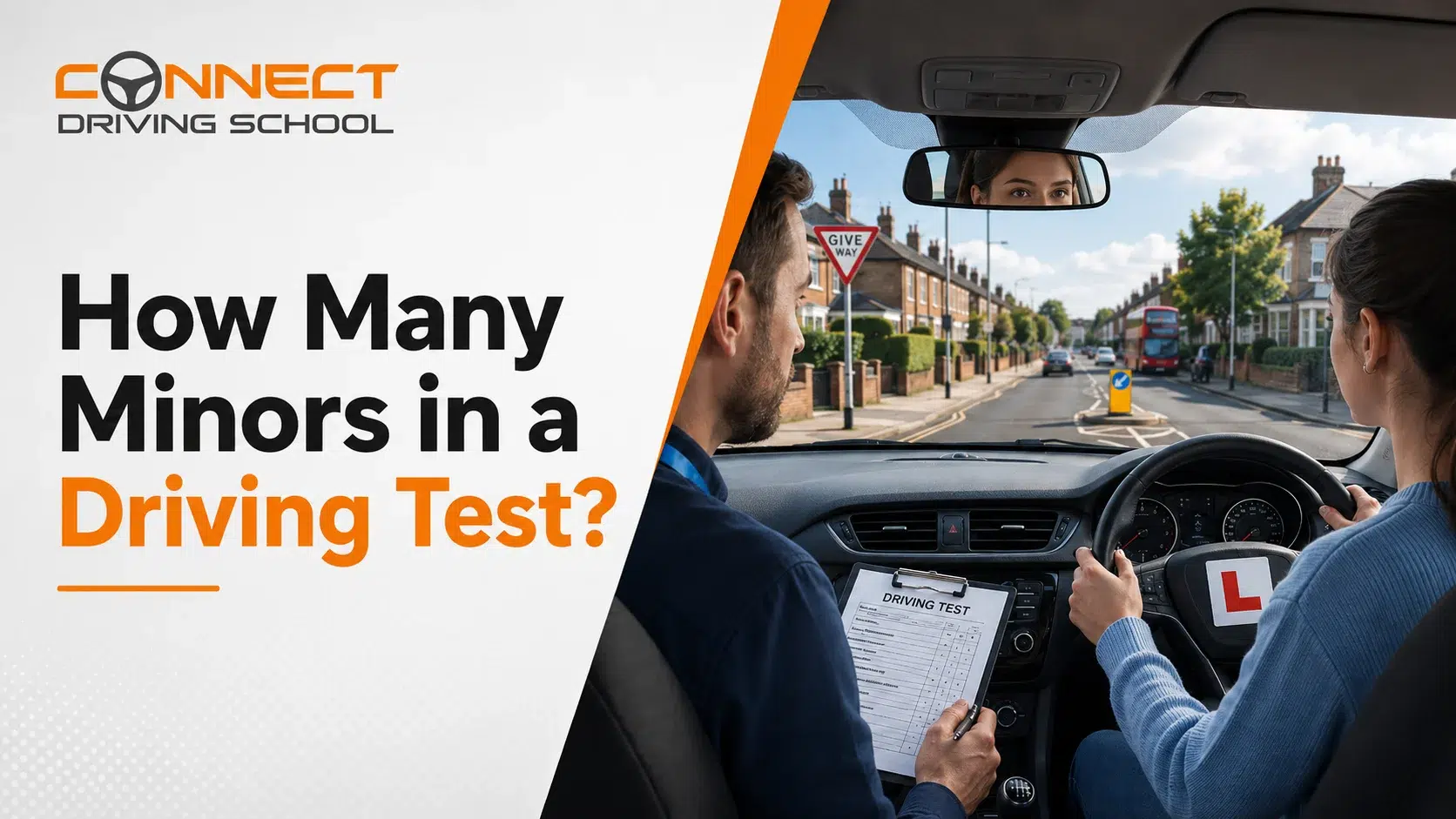
How Many Minors in a Driving Test? UK Rules Explained
Many learners worry that one small mistake will fail them. In reality, small mistakes usually don’t. Most people fail because of a serious fault or because too many minor faults build up during the test.
So, how many minors in a driving test are you allowed? The answer is simple. You can get up to 15 minor faults and still pass your UK driving test. If you reach 16, you fail. And if you get even one serious or dangerous fault, you fail right away, no matter how well the rest of the test goes.
Knowing this before test day gives you a real advantage.
What Is a Minor Fault on a Driving Test?
A minor fault, also known as a driving fault, is a small error that does not endanger anyone. It simply means you made a small mistake that did not put anyone in danger. Being bad doesn’t indicate that you are a bad driver.
Some common examples of minor driving faults on a UK driving test:
- Checking mirrors slightly late before signalling
- Hesitating briefly when pulling away from a stop
- Positioning a little too wide on a bend
- Stalling once and recovering safely
- Signalling too early or too late
These are the kind of small slips that even experienced drivers make. The DVSA understands this. A minor fault on its own will not fail you.
How Many Minors Can You Get on a Driving Test?
Here is the official DVSA driving test pass mark in the UK:
| Fault Type | Threshold | Result |
| Minor faults | Up to 15 | Pass |
| Minor faults | 16 or more | Fail |
| Serious fault | 1 | Fail |
| Dangerous fault | 1 | Fail |
You can pass your practical driving test in the UK with up to 15 minor faults. Most people who pass get between 3 and 8. Reaching 15 is very close to the limit. It is always better to aim as low as possible.
The driving test marking system is not about being perfect. It is about showing you can drive safely and consistently. Small mistakes are part of real driving. Patterns and big errors are what cause failures.
Minor, Serious, and Dangerous Faults: What Is the Difference?
Understanding all three types of driving test faults helps you know what really matters on test day. There are three levels the examiner can record. Each one has a different impact on your result.
Minor Fault (Driving Fault)
A minor fault is a small one-off mistake that does not create danger. You are allowed up to 15 minor faults and can still pass. One late mirror check or slight hesitation at a junction could be marked as a minor fault.
Serious Fault
A serious fault is a mistake that could have caused danger. It does not have to lead to an accident. Just one serious fault means an automatic fail. Examples include:
- Pulling out too close to another vehicle
- Poor observation at junctions without fully checking
- Changing lanes without proper mirror checks
Dangerous Fault
A dangerous fault means you caused actual danger. The examiner had to take action, or another road user had to react. One dangerous fault is always an immediate fail. This includes things like running a red light or forcing another car to brake.
Can Minor Faults Turn Into a Serious Fault?
Yes, and this is something many learners do not know until it is too late.
If you make the same minor fault three or more times in the same area, the examiner may upgrade it to a serious fault. That means an automatic fail.
For example, missing one mirror check might be a minor fault. But missing mirror checks five times during the test shows a pattern. The examiner sees this as a habit, not a one-off mistake. That pattern can become a serious fault.
This is why it is important to build strong habits before your test. The driving test rules apply throughout the test for consistent safe driving. A structured intensive driving course may be a solution if you’re still repeating the same mistake in your lessons.
Most Common Minor Faults on a UK Driving Test
The DVSA releases data on test results every year. The same fault categories come up again and again. Knowing them gives you a head start.
Here are the most common driving test minor faults in the UK:
Mirror Checks
Missing a mirror check before signalling or changing direction is the most common fault recorded nationally. Your mirror checks need to be clear. The examiner needs to see you actually look, not just glance.
Junctions and Roundabouts
Not looking properly before pulling out is one of the top reasons learners pick up faults. Slow down, look both ways, and only go when you are fully sure the road is clear.
Road Positioning
Drifting too wide or too close to the kerb — especially on turns or narrow streets — is another common slip. Proper road positioning during driving test shows the examiner you are in full control.
Use of Signals
Forgetting to signal, signalling too early, or not cancelling a signal after a turn are all easily avoidable faults. Always signal clearly and at the right time.
Steering Control
Jerky steering or turning the wheel too much during parking or reversing can lead to a minor fault. Smooth, steady hands indicate confidence and control.
If you still feel that your control and positioning are not where they should be, before the test, you can take a few focused refresher driving lessons to improve those skills before your test.
Tips to Keep Your Minor Fault Count Low
Good preparation before your test is the best way to keep driving test minors low. Here are the strategies that make the biggest difference:
- Build the MSM habit: Mirrors, Signal, Manoeuvre, every single time. Make it automatic before test day.
- Do not panic after one fault: The examiner has noted it and moved on. So should you. One minor will not fail you.
- Take your time at junctions: There is no rush. A careful extra second at a junction is never penalised. Pulling out too early can be.
- Make practice sessions on new roads: the best way to find out what you’re struggling with before the actual game!
- Get a good night’s sleep the night before: Fatigue contributes to hesitation in decision-making and loss of observations.
Frequently Asked Questions
Is it possible to pass a driving test with 15 minor faults?
Yes. DVSA has a maximum of 15 minor faults. So as long as you have no serious or dangerous faults, a rating of 15 minors is still a pass, and anything lower is better for your confidence.
What happens if you fail a driving test with 16 minors?
Under DVSA rules, if you get 16 or more minor faults in your test,t even if you do not commit a serious or dangerous fault in the remainder of your test, you will fail automatically.
Does the examiner let you know your minors in the test?
No. The examiner will not provide feedback during the test. Your result and fault sheet are only revealed at the end, in the debrief.
Do minor faults affect your driving licence after you pass?
No. Minor faults from your practical driving test are only used for assessment of your performance. They are not added to your driving licence or kept as penalty points.
Comments (0)